EN
August 22,2026
Developing several colorways from one keyboard platform can give brands more shelf presence without forcing every SKU to begin as a completely new product. The housing color, keycap zones and printed graphics can create different visual identities while the layout and core specification remain consistent.
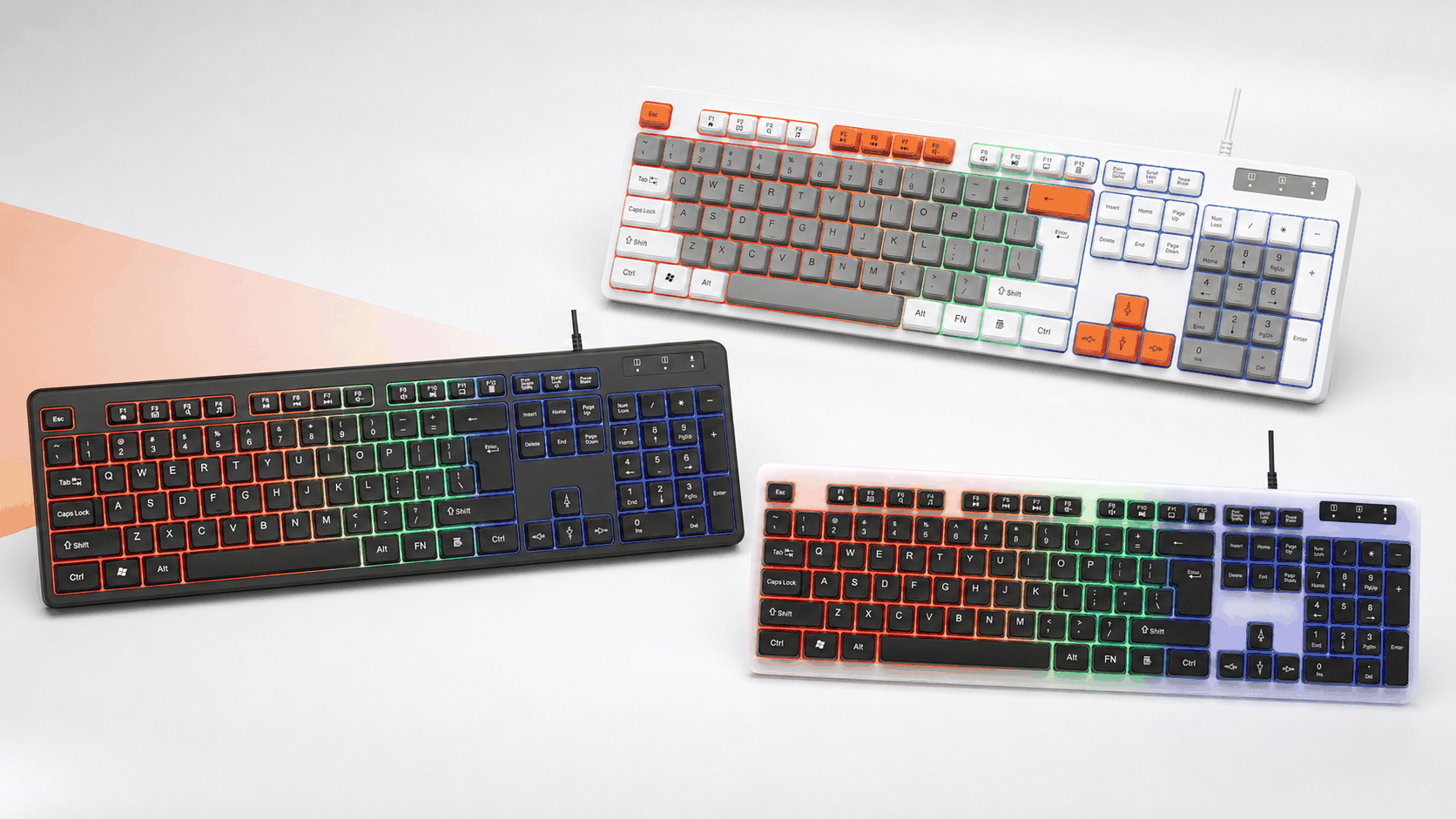
The Selainda-7C01 provides a useful custom keyboard OEM example. It is a full-size, 104-key wired keyboard with a rubber dome structure—not a mechanical keyboard. The supplied materials show three visual directions: a white housing with gray, white and orange keycaps, a black version, and a translucent white concept with dark keycaps.
For buyers, the opportunity is straightforward: start with one shared platform, select a color direction for each channel, and confirm every material and appearance detail through samples. This approach can support a coordinated private-label keyboard range while keeping the product positioning accurate.
All three Selainda-7C01 concepts are based on the same full-size platform. The verified specification records a 104-key layout with a dedicated numeric keypad, a wired USB connection and rubber dome key construction. Overall dimensions are 436.5 × 132.5 × 25 mm, and net weight is 474 g.
| platform item | 7C01 specification |
| Keyboard type | Wired rubber dome keyboard |
| Layout | 104-key full-size layout with numeric keypad |
| Dimensions | 436.5 × 132.5 × 25 mm |
| Net weight | 474 g |
| PCB | 1.6 mm single-sided PCB, version 01 |
| Key travel | 3.0 ± 0.4 mm |
| Key life | At least 5 million actuations |
| Branding method | Screen-printed logo and key legends |
sing one base model does not mean every colorway will have identical commercial conditions. A new molded color, different keycap combination or special surface appearance may affect feasibility, sample work, quantity requirements and cost.
The main advantage is product-line clarity. A buyer can keep a familiar layout and common specification while presenting distinct visual choices for different sales channels. A black SKU may suit broad distribution, a white-and-orange version may support a branded desk setup, and a translucent white concept may create a more differentiated ecommerce listing.
This also gives procurement teams a more structured way to compare proposals. Instead of mixing color decisions with an entirely different keyboard architecture, the team can review which visible parts change, which engineering elements remain fixed, and which items require a new sample.
For a private-label keyboard program, the shared platform can also simplify merchandising language. Product pages can describe one common family, then explain how housing color, keycap zoning and graphic treatment distinguish each SKU. The exact benefits depend on the project, so buyers should still confirm component availability, approved materials and production conditions for every colorway.
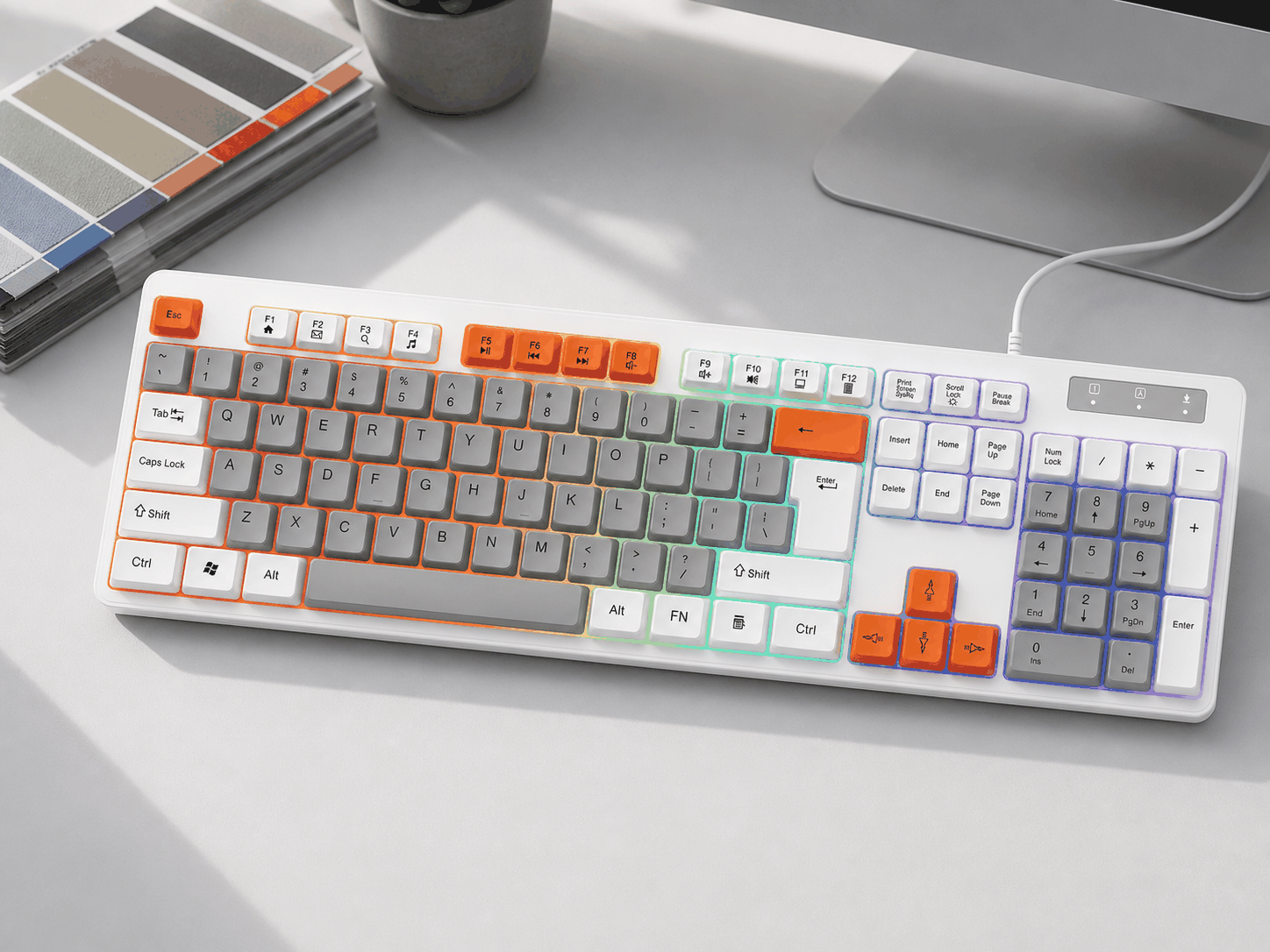
1. White Housing with Gray, White and Orange Keycaps
The white concept uses color zoning to create a more recognizable identity. A white housing establishes a bright base, gray keycaps define the main typing and numeric areas, and orange keys provide visual accents around selected functions and the directional cluster.
This direction can fit modern desk setups, office-and-light-gaming crossover collections, and private-label brands that use orange as an accent color.
A digital rendering cannot fully represent molded-plastic color, gloss, texture or how adjacent parts look under retail lighting. The final appearance should therefore be checked on the intended housing and keycap materials. If exact brand color is important, the buyer should supply a color reference and approve a physical sample.
Black is the standard color recorded in the supplied specification and the most neutral of the three directions. A black housing and black keycaps can coordinate with mice, headsets and other desktop accessories in a common peripheral family.
This makes the black version a practical base for distributors, general retail programs, office projects and entry-level gaming-style collections. Its strength is versatility rather than an unsupported performance claim.
The translucent white concept combines a light-colored housing with dark keycaps, creating stronger contrast and a more distinctive silhouette. This direction may suit ecommerce brands, youthful desktop collections and light-color peripheral ranges that need a visually different SKU.
- Target housing color or supplied physical color reference
- Main keycap colors, functional zones and accent keys
- Logo artwork, screen-print position and print color
- Key legend artwork and required language or layout
- Bottom-label artwork, subject to label requirements
A disciplined sample process prevents an attractive screen rendering from becoming an inaccurate production promise.
1. The buyer supplies the target color direction, market positioning, artwork and estimated quantity.
2. Housing and keycap color zones are mapped in a rendering or marked product image.
3. Materials, printing methods and the technical configuration are reviewed.
4. A physical sample is produced for appearance, color and function approval.
5. Packaging, labeling and documentation are confirmed where applicable.
6. Mass production begins only after the approved specification and sample are documented.
GET A FREE QUOTE!
Quick response: share your needs with us please, we'll contact your in very short time.